

For Those About to Ruck…
Barbarians and Bulls. Colonials and Rogues. Trench scribe and international-calibre rugger Trixie Pacis tackles an unofficial retrospective on Kootenay rugby’s 70-year history.
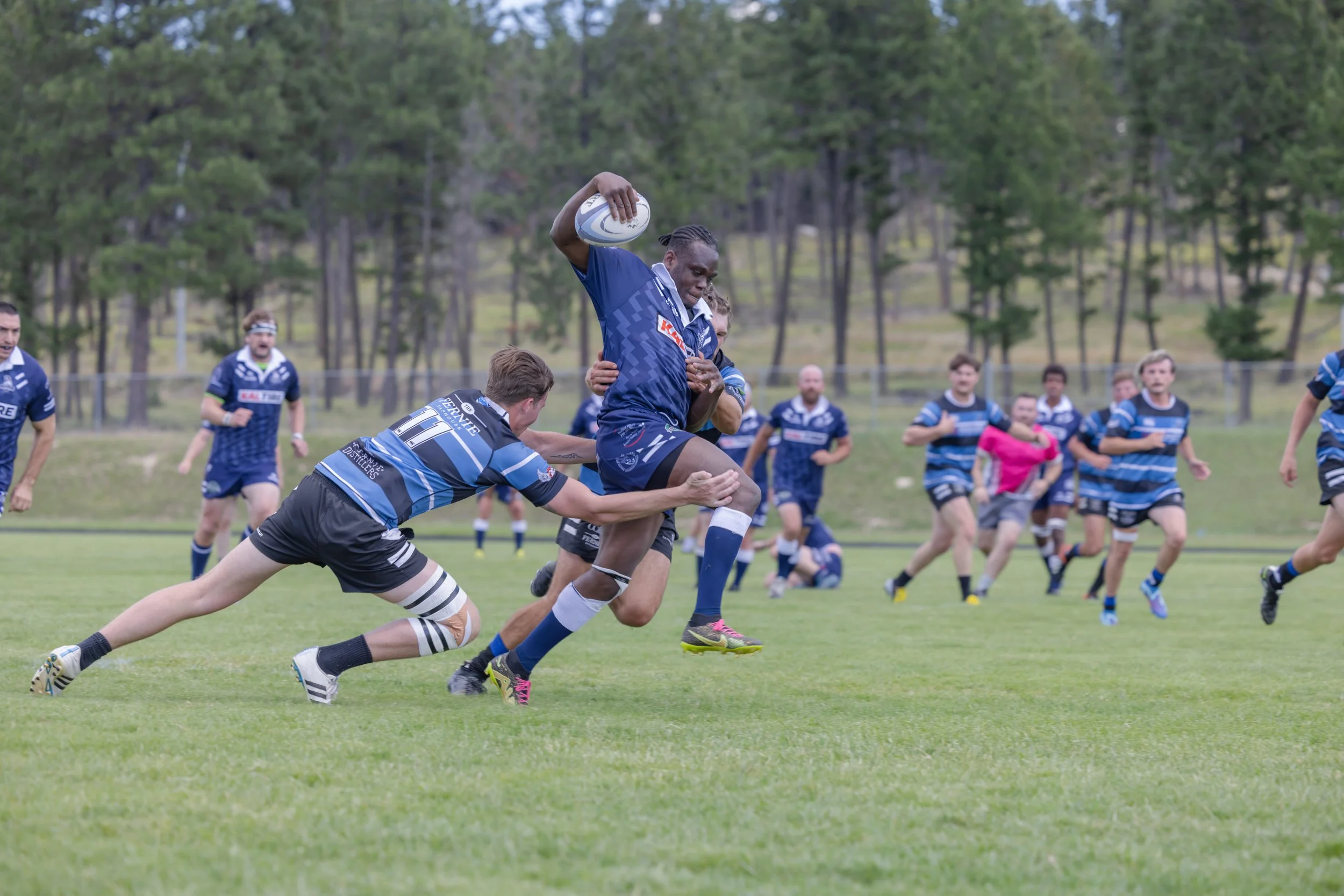
Up in arms — Rocky Mountain Rogues player Daniel Dixon aims to evade the grasp of Elk Valley Bulls tacklers. — Jenny Bateman Photo
Saturday is a rugby day across the globe, and the Kootenays is no exception. Here, mountains provide a stunning backdrop for the carnage of a match — thunderous tackles, sweaty scrums, and all the mischief that unfolds during what we players call the ‘third half.’
Rugby took root in Canada in 1864 when British military officers first played the game on Canadian soil. British Columbia has since evolved into one of the country’s dominant rugby provinces, now home to over 90 registered clubs. Most are clustered in the Lower Mainland, but a handful have taken hold in the Kootenays where winter is long, travel is far, and communities are built on resilience.
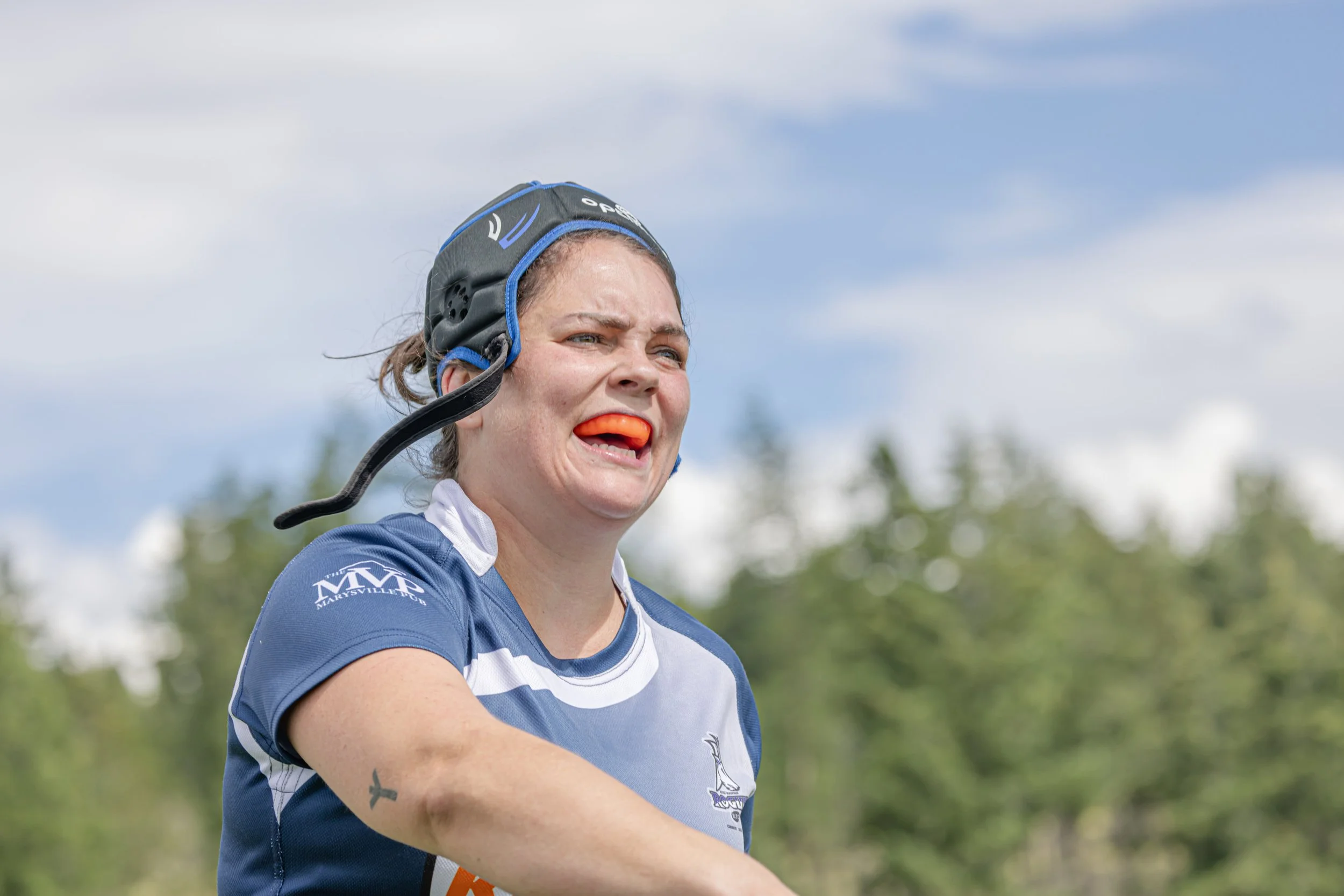
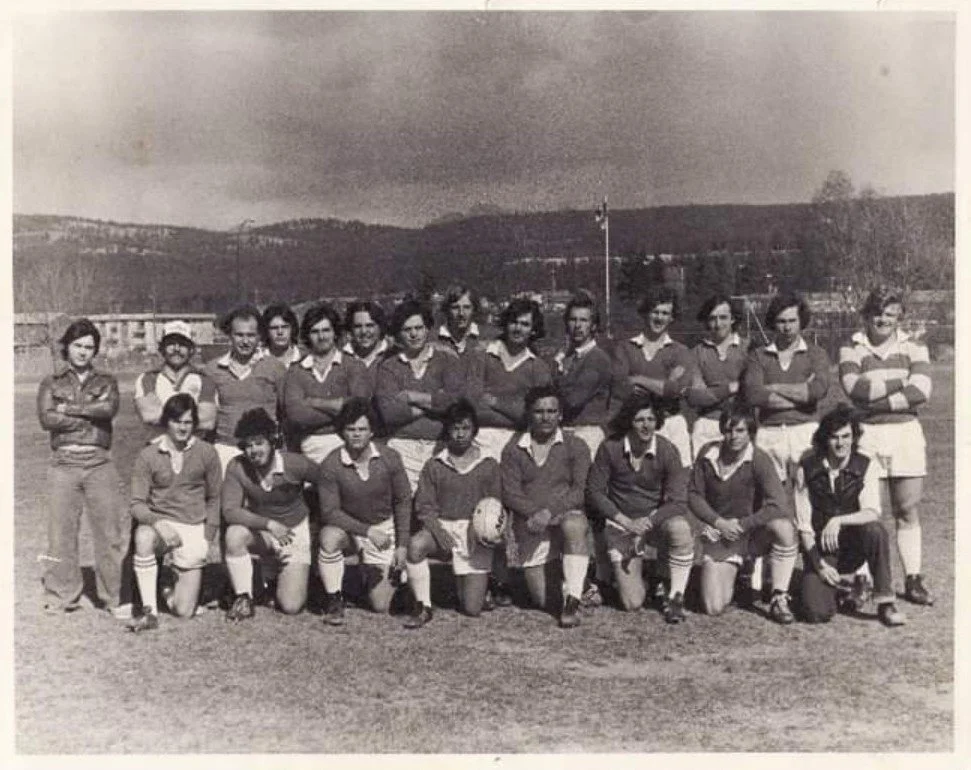
TOP — Kelsey Olson, women’s forward. BOTTOM — The 1980 Mount Baker Secondary team. — Jenny Bateman Photos
Peaks and Valleys
Legend has it that rugby was played in the Kootenays as early as the 1920s. Little is known of that era, but history records show that rugby has ebbed and flowed in the Kootenays for the last half century. The Kimberley Barbarians had been active since the early 60s, the Trail Colonials since 1966, and the Cranbrook Rugby Club since 1976. The Kimberley and Cranbrook teams amalgamated in 1978 and adopted the Rocky Mountain Rogues moniker in 1984 after “much thought and a few beers.”
Each club has experienced intoxicating highs and demoralizing lows. Jim Maletta, a Cranbrook founding member who retired from the game at the ripe age of 50, fondly recalls heated matches against Trail, the Nelson Grizzlies, and the Invermere Tigers.
“We went through peaks and valleys like crazy, and they were very tied to the economy,” Maletta reflects. Economic cycles, seasonal work, and the outflow of players to school or jobs elsewhere have all shaped club fortunes.
The story is the same for the Elk Valley Rugby Football Club, which officially formed in 2013 after founding members Pete Dudman and Dan Parker unknowingly plastered Fernie with separate recruitment posters. They consolidated their efforts and within six months, the Bulls had won the Saratoga Cup, returning the coveted trophy to the Kootenays for the first time since the 1970s. Their instant success set the stage for a deep-seated rivalry: to this day, matches between the Elk Valley Bulls and Rocky Mountain Rogues are physical, emotional, and fiercely contested.
The Kootenay season culminates in a league championship, and the leading teams go on to the Saratoga Cup — a coveted trophy contested by winning teams across the Kootenay, Okanagan, central interior, and northern regions of the province. Held each August over a single weekend, it is more than a tournament: it’s a proving ground. Saratoga offers a provincial pathway for grassroots teams in geographically remote regions.
Winning the Saratoga Cup requires discipline and commitment — no small ask for volunteer-run clubs whose players often make thousand-kilometre road trips to compete. That’s precisely why it matters. Saratoga celebrates not just skill, but survival — the ability of small clubs to keep showing up year after year.
Let’s go, girls
Rugby in the Kootenays was historically a men's game by default. Women typically trained alongside men, filled gaps where needed, or played socially. For Lesley McKenzie, a capped Team Canada player currently coaching women’s rugby in Japan, playing in men’s games with the Nelson Grizzlies was the only option in the early 2000s.
Today, women’s rugby is thriving in the form of rugby sevens: a fast-paced, seven-a-side variation of the game that made its Olympic debut in 2016. Elk Valley launched its women’s program in 2015. The Rogues followed suit, reigniting their women’s side in 2023 and placing second at the Saratoga Cup three years running. Trail RFC, re-established in 2024 under the leadership of Cory Walker, fields both a men’s and women’s team — while rumour has it that a women’s side is rallying in Nelson.
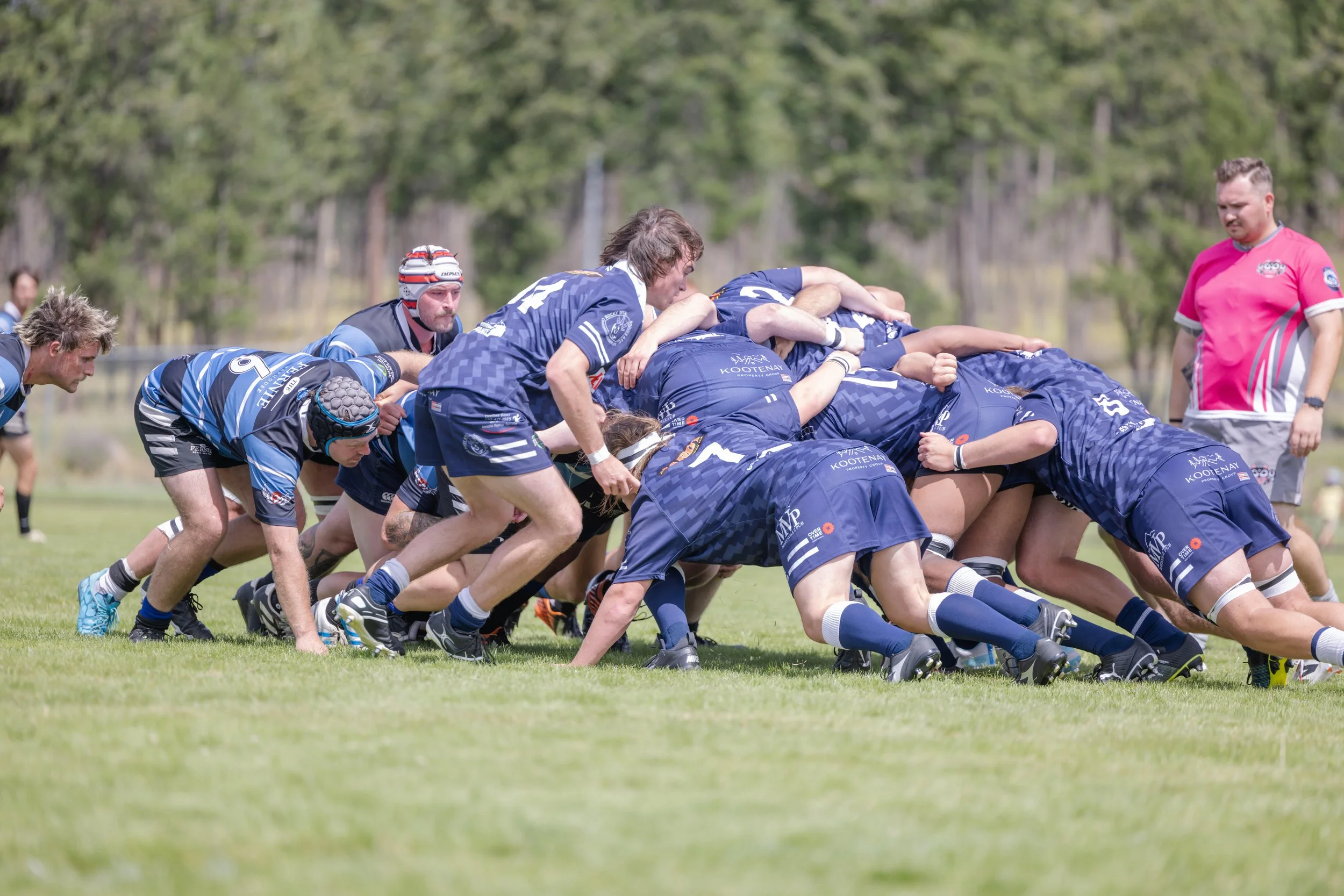

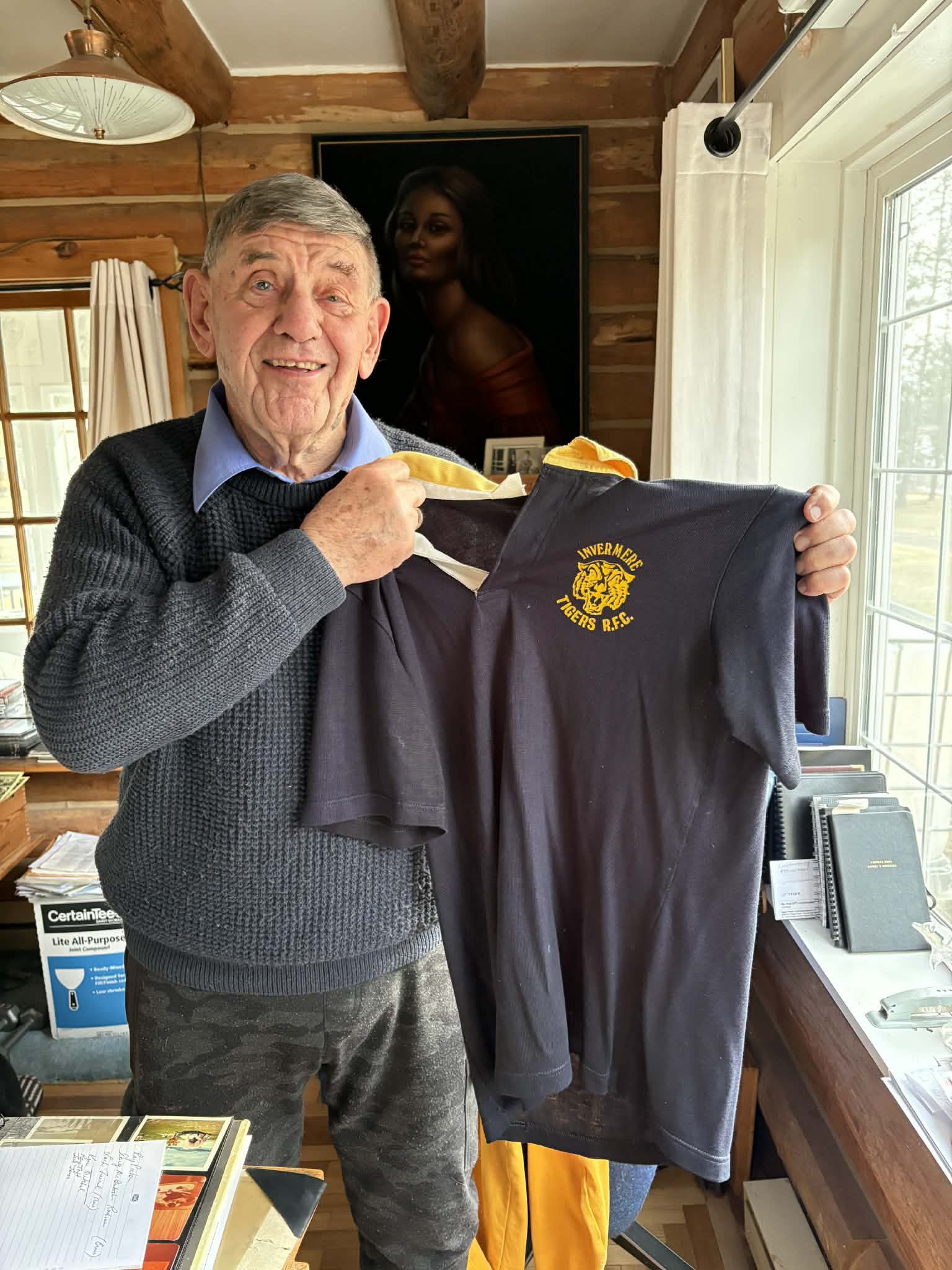
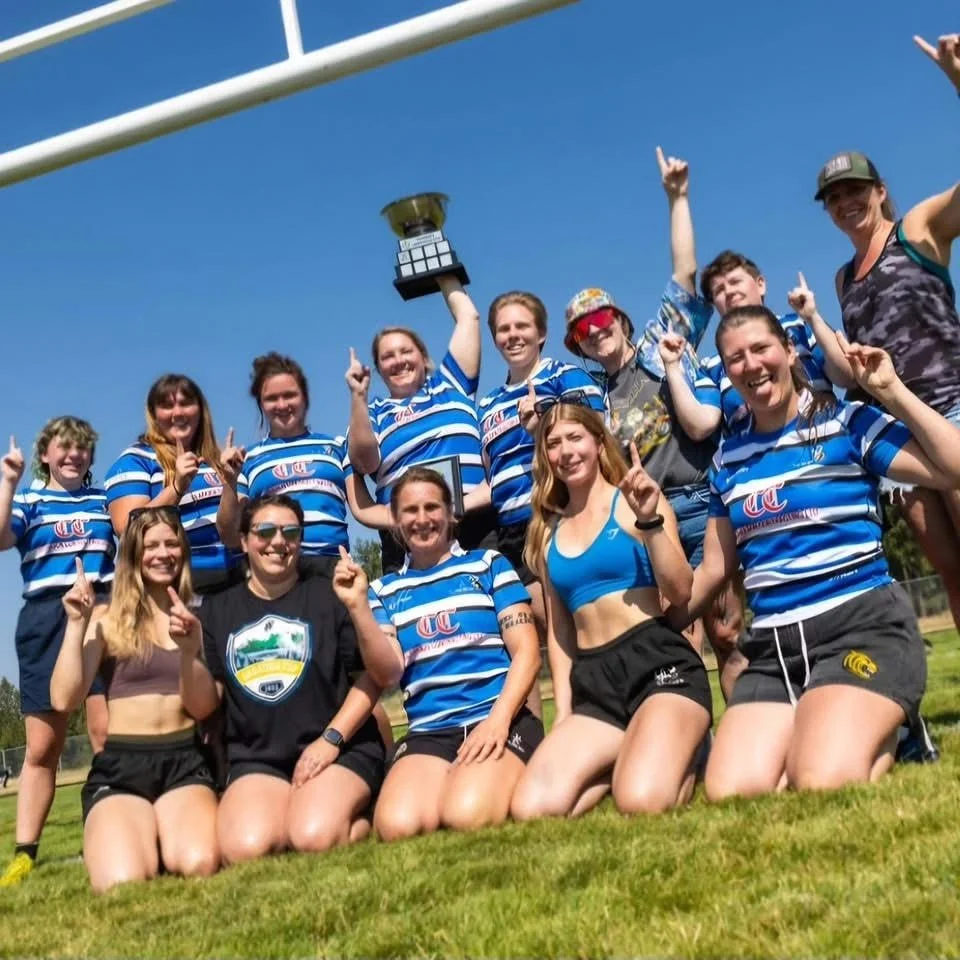
Hooker, lineout, and sinker — (Clockwise from top) The scrum — a place for dark arts, often practiced out of the ref’s view. (Jenny Bateman Photo) The Elk Valley Women’s Rugby Football Club, winners of the 2023 Saratoga Cup. (Elk Valley RFC Photo) 87-year-old former Invermere Tiger Ray Picton. (Kelsey Adele Photography) Kootenay-raised rugby player Lesley McKenzie, player for Team Canada and current coach of Japan’s National Women’s team — known as the Cherry Blossoms.
A place misfits belong
Rugby has always been a sport that makes room. Rugby union has a position for every type, from thick-necked props to speedy wingers, for brawn and also brains. Diversity is woven into the fabric of the game and reflected in the rugby community — a motley cast of characters bound by a desire to ruck and get rucked.
In remote towns with high turnover and transient populations, a sense of belonging is powerful — and joining a rugby club offers an instant family. In the Kootenays, where sustainable growth depends on cooperation as much as competition, friendships are forged even between players on rival teams. Clubs often lend players to each other when numbers are thin; players buy their opposite a beer after the match, and often boat races ensue, giving the losing side a shot at redemption.
Ultimately, players share an understanding: they know what it means to put your body on the line and what it takes to make things better for the next generation of athletes.
Grassroots growth
Meanwhile across the region, mini rugby, rookie rugby, and high school rugby programs are flourishing. Cranbrook teens Evan Stahl and Cliff Jarvis made the BC Bears selection, paving a rare pathway to provincial and national rugby for those with World Cup and Olympic ambitions.
Perhaps the clearest sign of Kootenay rugby’s generational pull is the rise of second-generation Rogues — players who grew up on the sidelines while their parents toughed it out and now proudly wear the jersey themselves. Rogues President Jared MacDonald remembers getting into trouble at the pitch while his dad trained. Fittingly, he is known around the club as “Deuce,” coined after his father “Ace,” and now has a son of his own causing mischief on the sidelines.
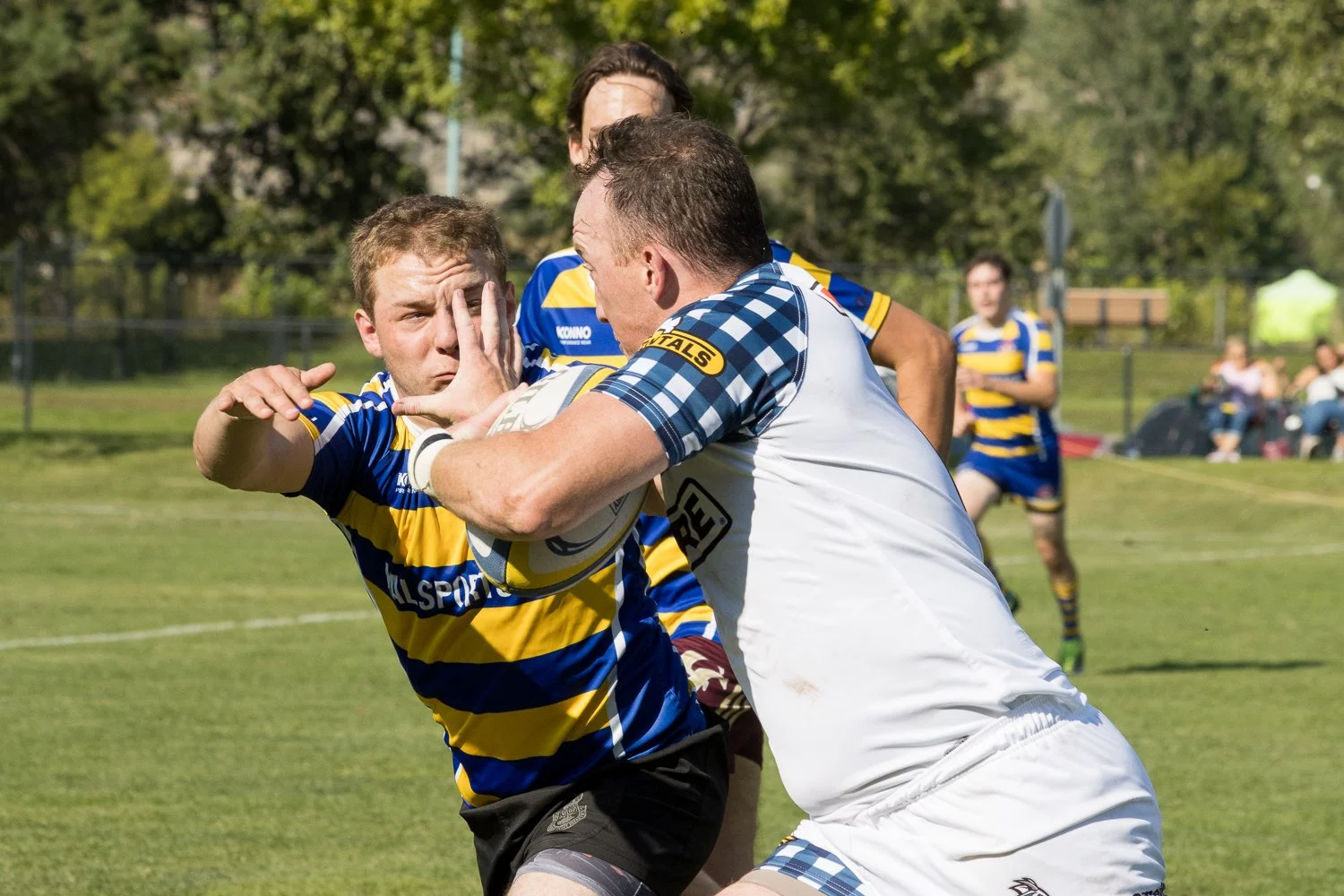
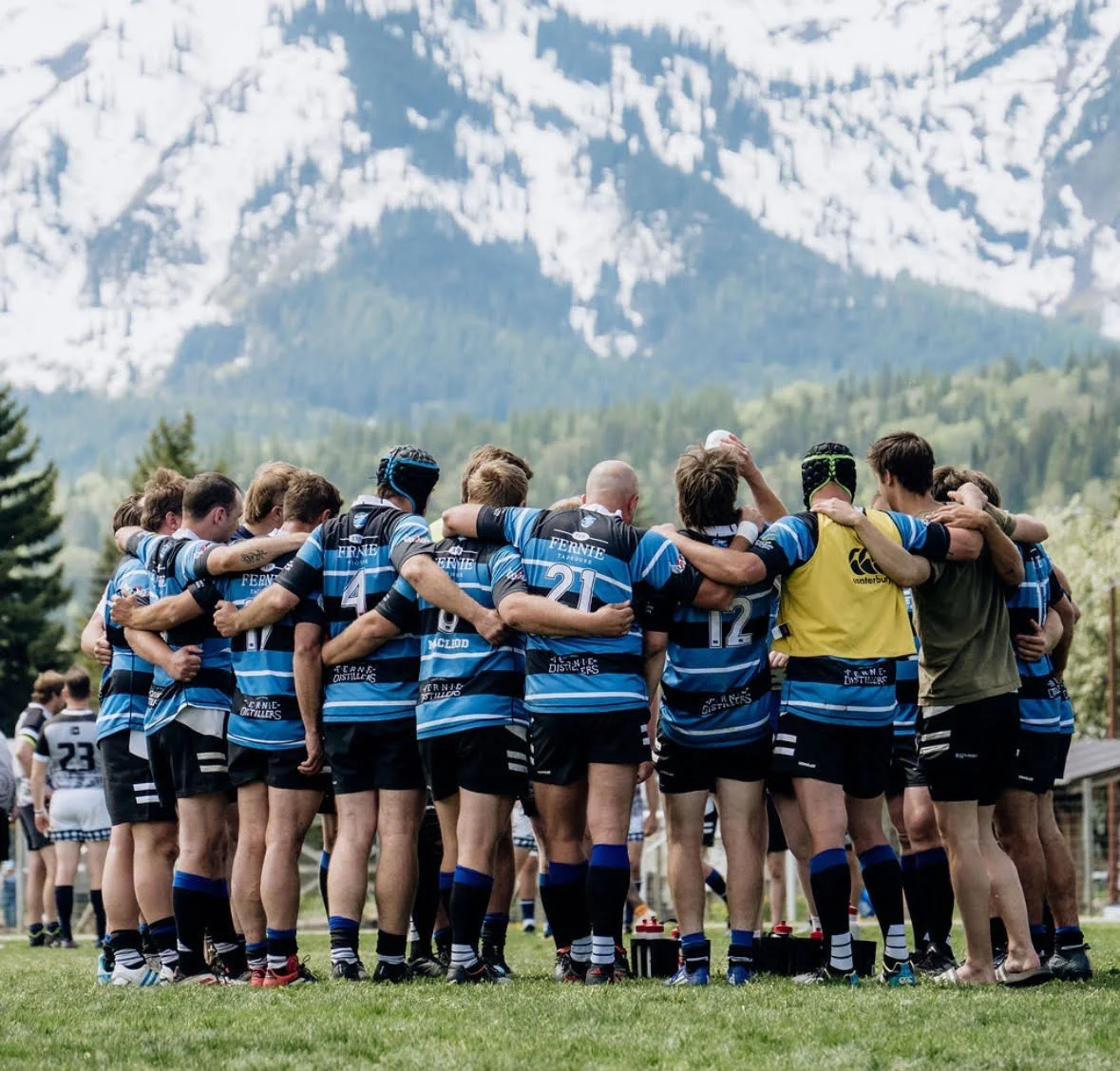
Face the facts — (Top) While not as rough and occasionally lawless as it once was, with rules introduced in the last 10 years to protect players in contact, rugby’s physicality is still noteworthy for the fact there is little protection from tough tackles and loose play. — Trixie Pacis Photo (Below) The Bulls with a beauty backdrop at their home field, Fernie’s Prentice Park. — Somhairle Greene Photo
For the love of the game
Rugby in the Kootenays has never come easy. It has survived recessions, population fluxes, and decades of logistical quandaries. It has relied on volunteers who coach and play at the same time, executives who juggle spreadsheets after practice, and players willing to drive hours for a single match. Rugby exists here purely because of people who love the game and want others to love it, too.
~ Written by Trixie Pacis
Pacis, a rugby player of 20 years, has represented the Philippine National Team 14 times.
Find this full-length story and more in The Trench’s Spring/Summer 2026 edition: